
Test Receivers Detect Unwanted CATV Emissions
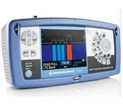
With the Rohde & Schwarz EFL110 and EFL210 portable TV test receivers, cable TV network operators are able to locate the loose connections or damaged shielding that can generate unwanted electromagnetic emissions in the UHF range and cause interference in cellular LTE networks. Each instrument is equipped with a lithium-ion battery that supplies power for more than four hours of operation in the field.
The EFL110 and EFL210 CATV analyzer and leakage detectors use FFT analysis to monitor the spectrum and detect even weak, sporadic interferences. For evaluating faults in the US cable TV network, the EFL210 comes with an additional test receiver that supports J.83/B and NTSC cable TV standards.
Both instruments have a frequency range of 5 MHz to 2500 MHz; sensitivity of 8 dBµV/m in E-UTRA bands 12, 13, 14, and 17; and sensitivity of 17 dBµV/m in the aeronautical radio band from 108 MHz to 139 MHz. EFL-Suite software, which is supplied with each unit, transmits the measurement results to a PC.
Source: Rohde & Schwarz